2X LAmp Master Mix is a crucial reagent designed for Loop-Mediated Isothermal Amplification (LAMP), an efficient and rapid method for amplifying nucleic acids. Unlike conventional PCR methods that require thermal cycling, LAMP operates at a constant temperature, making it a powerful tool for molecular diagnostics in resource-limited settings. This technique is particularly important in pathogen detection and genetic testing, providing a quick and reliable way to amplify target DNA or RNA sequences.
LAMP relies on the use of Bst DNA polymerase, a heat-stable enzyme that can synthesize DNA at a single temperature, usually between 60°C and 65°C. The 2X LAmp Master Mix simplifies the process by combining all necessary components, including nucleotides, buffer, and the polymerase enzyme, into a single reagent. This streamlines the procedure, allowing researchers to set up amplification reactions more quickly and with fewer steps.
According to a study from NIH, LAMP assays using the 2X LAmp Master Mix can achieve detection within 30 to 60 minutes, outperforming traditional PCR techniques in terms of speed. This rapid amplification makes it an excellent option for field-based diagnostics, where quick results are essential for decision-making.

One of the key advantages of LAMP technology is its robustness in detecting pathogens such as viruses, bacteria, and parasites. According to the Centers for Disease Control and Prevention (CDC), LAMP assays have been effectively employed in diagnosing infectious diseases, including Zika virus and malaria. The 2X LAmp Master Mix enhances the sensitivity and specificity of these tests, allowing for the detection of low viral loads, which is critical in early diagnosis and monitoring.
For example, a recent study published by PubMed Central (PMC) demonstrated the use of LAMP for rapid detection of SARS-CoV-2, the virus responsible for COVID-19. The use of 2X LAmp Master Mix in this context allowed for faster and more accessible testing, especially in regions with limited laboratory infrastructure.
The National Institutes of Health (NIH) highlights that LAMP assays using 2X LAmp Master Mix are not only faster but also more cost-effective than traditional PCR. Because the reaction takes place at a constant temperature, there is no need for expensive thermal cyclers. Instead, a simple heating device can maintain the required temperature, making the technique accessible even in low-resource settings.
Moreover, LAMP’s high specificity is achieved by using multiple primers to recognize distinct regions of the target sequence. This reduces the likelihood of non-specific amplification, providing a clear advantage over PCR, where primer-dimer formation can sometimes lead to false positives.
The simplicity and speed of LAMP, when combined with the 2X LAmp Master Mix, make it an ideal tool for point-of-care testing. The World Health Organization (WHO) has recognized the potential of LAMP assays in controlling outbreaks of infectious diseases, particularly in areas where access to sophisticated laboratory equipment is limited. By providing quick, accurate results, LAMP assays help public health officials contain outbreaks more effectively.
For instance, LAMP-based diagnostic tools have been used in detecting tuberculosis in low-resource settings, as noted by research funded by the U.S. Department of Health & Human Services (HHS). The 2X LAmp Master Mix plays a vital role in these diagnostics, ensuring that even small quantities of bacterial DNA can be detected with high accuracy.
The versatility of 2X LAmp Master Mix extends beyond pathogen detection. It is also widely used in genomic research, particularly for genotyping and mutation detection. According to research published by Stanford University, the speed and efficiency of LAMP make it an attractive option for high-throughput genetic testing, including applications in cancer research and personalized medicine.
Additionally, the mix can be adapted for RNA amplification when coupled with reverse transcriptase, allowing researchers to perform RT-LAMP. This technique has been crucial in detecting RNA viruses, including influenza and coronavirus, as highlighted by studies from Johns Hopkins University.
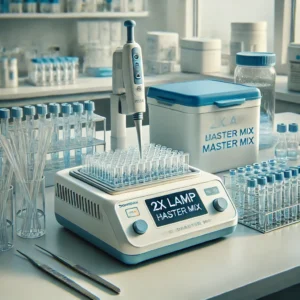
The 2X LAmp Master Mix is a powerful and versatile reagent that significantly enhances the efficiency and accuracy of LAMP-based molecular diagnostics. From pathogen detection to genetic research, it offers numerous advantages over traditional amplification methods, including speed, simplicity, and cost-effectiveness. Its role in enabling quick diagnostic results makes it an indispensable tool for public health and clinical laboratories, especially in low-resource settings.
As research from institutions like NIH, CDC, and WHO continues to highlight the benefits of LAMP, the use of 2X LAmp Master Mix is likely to expand, providing critical support in the ongoing battle against infectious diseases and advancing our understanding of genetic conditions.